paper recycling plant

Study request

Mashroo3k Economic Consulting offers a feasibility study for a paper recycling plant project, ensuring the highest profitability and optimal payback period. The study is based on detailed analyses of the industrial sector in Saudi Arabia, evaluation of local and international competitors’ strategies, and the provision of competitive pricing offers.
Capital

rate of return

Recovery period Third year

Paper recycling plant description

Paper recycling plant description

The paper recycling plant reprocesses used and damaged paper waste using the latest equipment and machinery, producing new paper raw materials suitable for various uses. The project targets numerous institutions such as pharmacies, healthcare centers, detergent companies, clinics, and hospitals.

Experts at Mashroo3k for Economic Consultancy point out that a paper recycling plant is one of the projects witnessing significant growth in Saudi Arabia, especially in light of urban development policies, infrastructure rehabilitation, and environmental preservation from the hazards of waste accumulation or incineration. Paper recycling projects contribute to reducing demand for raw materials, generating high economic returns, and lowering the unemployment rate, which has notably increased in Saudi Arabia in recent years.
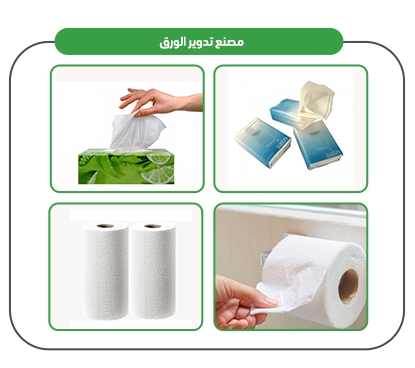
Paper recycling plant products

Paper recycling plant products

  • Pocket handkerchiefs.
  • Paper towels.
  • Scented tissues.
  • Toilet paper.
  • Facial tissues.
  • Kitchen and toilet rolls.
  • Car tissue packs.
  • Paper towels.
  • Sanitary tissues.
  • Wet wipes.
  • Special tissues and rolls.

Mashroo3k for Economic Consultancy provides investors interested in establishing a paper recycling plant in Saudi Arabia with a range of specialized feasibility studies.

It is based on up-to-date databases specific to the Saudi market. What makes a project successful. and maximize profitability. The best payback period, through accurate studies of the industrial sector in Saudi Arabia, customer desires, analysis of local and foreign competitors’ strategies, and the ability to provide competitive price offers.
Why mashroo3k ?

Why mashroo3k ?

  • Mashroo3k has over 11 years of experience in preparing feasibility studies, market research, and providing a wide range of consulting services, including administrative, economic, financial, and others.
  • Mashroo3k has offices in 7 international branches, located in Saudi Arabia, the UAE, Egypt, Qatar, Oman, Yemen, and Iraq, in addition to its agents in China, Singapore, and other countries.
  • Mashroo3k has provided over 8000 services and feasibility studies, helping thousands of clients achieve their investment goals.
  • Mashroo3k’s services are accredited and trusted by all financial institutions and entities in the Middle East.
  • Mashroo3k’s service coverage extends to 35 countries across all continents.
  • Mashroo3k is a member of over 100 prestigious international institutions specializing in market research and business management.
  • Mashroo3k’s team consists of 350 consultants with extensive knowledge of economic sector indicators and opportunities. Thanks to the diversity of their expertise, they ensure effective solutions and strategies.
  • Mashroo3k is contracted with over 10,200 suppliers in 35 countries to support projects logistically with production lines, raw materials, machinery, equipment, and similar resources.
  • Mashroo3k possesses a vast database that enhances the accuracy of its predictions and analyses, as well as its ability to manage risks effectively.
  • Project features
  • Study Contents
  • Sector Indicators
  • The Project as an Investment Opportunity
مؤشرات القطاع
  • Preserving the environment.
  • Contributing to covering part of the increasing demand for all types of paper napkins.
  • Creating new investment opportunities with good returns.
  • Make a good return for the entrepreneur.
  • Achieving good returns, cash flows and added economic value.
  • Optimal use of resources and assets.
  • Providing high quality products.
  • Maintaining a price level that enables the project to obtain its target share.

Executive Summary

  • About the project
  • Financial Indicators
  • Rationale for the project
  • Government investment incentives in the project field
  • Target Markets
  • Project indicators and final results

Study of project services/products

  • Project description and all its products/services.
  • Project advantages and production requirements.

Market size study.

  • Understanding distribution channels.
  • Consumer behavior, preferences, and tendencies.
  • Competitors’ products or services, along with their strengths and weaknesses.
  • Market nature and its characteristics.
  • The demand size for the offered product or service.
  • The available share of the target market.
  • The optimal marketing strategy.

Risk assessment study.

  • Risk identification.
  • The impact of risks on the project.
  • Risk prevention methods.
Technical study
  • A detailed description of the project’s products, expected production capacity, and determination of investment costs.
  • Determining the required electricity and water capacity.
  • Determining the project’s labor requirements.
  • Determining the project’s requirements.
  • Calculating construction and building costs.
  • Calculating the total capital
  • Determining the annual operating costs.
  • Determining the amount of working capital.
Financial study.
  • Total investment costs required for the project.
  • Organizing cash flow statements, income statements, and the balance sheet for the first ten years of operation.
  • Determine the expected annual revenues of the project in light of the specified operational capacities
  • The optimal financing structure for the project in light of investors’ capabilities and financing conditions.
  • The project’s financial indicators and sensitivity analysis.
Organizational and administrative study.
  • Project workforce.
  • Organizational structure.
  • Job responsibilities.
المشروع كفرصة استثمارية

In recent years, Saudi Arabia has turned its attention to the recycling sector, recognizing its importance in achieving the goals of Vision 2030 and its potential to drive the economy towards sustainable development. In 2017, the Saudi Investment Recycling Company (SIRC) was established with the support of the Crown Prince, aiming to save billions of riyals lost annually from the Kingdom’s treasury due to the lack of focus on recycling industries. These lost funds have been approximately estimated to range between 30 billion and 70 billion SAR.

  To reassure our clients about investing in this sector, we will present here the most important indicators and results of the sector according to the latest statistics available to us:
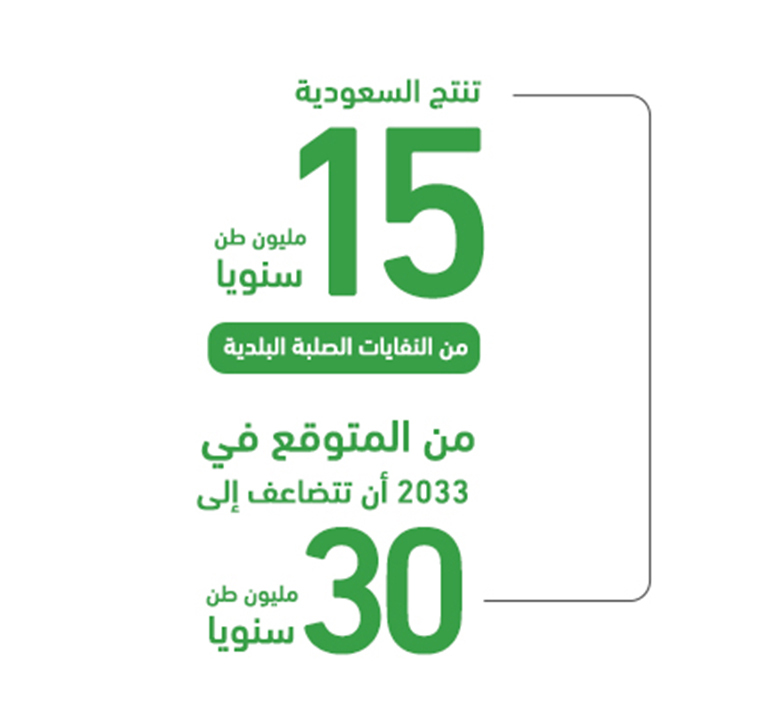
  • Conservatively estimated, global reports indicate that Saudi Arabia produces 15 million tons of municipal solid waste annually, at a rate of 1.4 kg per person. This amount is expected to double to 30 million tons by 2033, driven by a population growth of 3.4%.
  • The amount of demolition and construction waste exceeded 14,399,005 tons.
  • The amount of textile waste exceeded 959,535 tons.
  • The amount of glass waste is estimated at 892,096 tons.
  • Metal waste has exceeded 1,096,754 tons in recent years.
  • The amount of plastic waste reached 2,296,978 tons.
  • The amount of cardboard waste reaches 2,854,321 tons.
  • Organic waste is estimated at 9,757,544 tons.
  • 406 landfills is the total number of landfills in the Kingdom.


مؤشرات المشروع

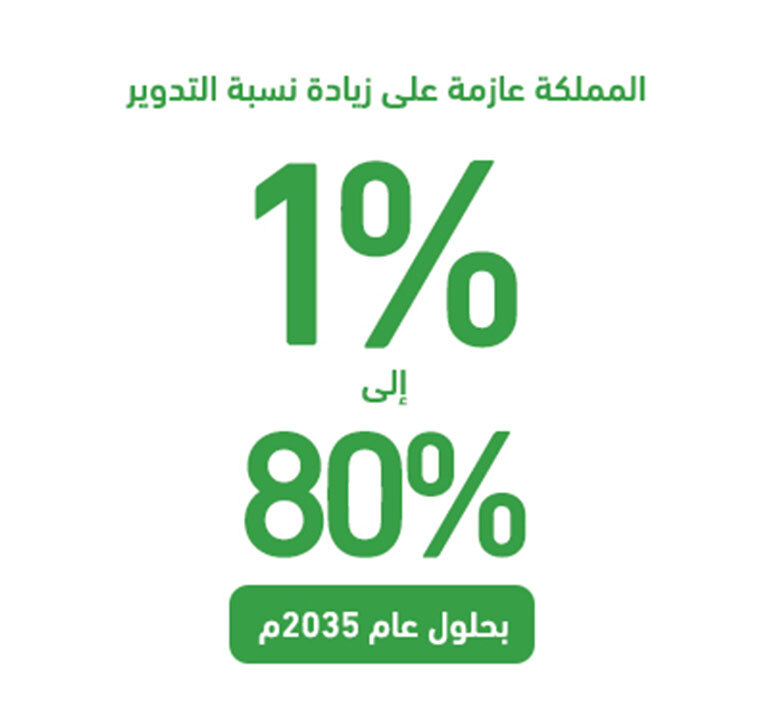
Mashroo3k affirms that the volume of waste in Saudi Arabia now exceeds 45 million tons annually. With the Kingdom determined to increase the recycling rate from 1% to 80% by 2035, the company believes that investing in this vital sector will be highly profitable.

  Regarding the prospects of the recycling and energy industry, we can mention the following:

  • In the Kingdom, we can save 45,000 terajoules of energy by recycling glass and metals alone.
  • 3 TWh of electricity could be generated annually if all food waste in Saudi Arabia was used within the walls of biogas plants.
  • We could generate 1-1.6 TWh of electricity in Saudi Arabia annually if plastic and other mixed waste were processed, Like this: (Paper, cardboard, wood, textiles, leather, etc.) in pyrolysis processes.

  Mashroo3k for Economic Consultancy and Market Research emphasizes that recycling is one of the promising sectors in Saudi Arabia, and its projects will present genuine investment opportunities, especially as the Kingdom moves towards a green economy. Environmental preservation has become a top priority for the wise leadership, as clearly reflected in Vision 2030.

By sector


Capital (in millions)


rate of return


Keywords: :

paper recycling plant Paper recycling plant in UAE Paper recycling plant project