Bakeries and Confectionery Shop

Study request

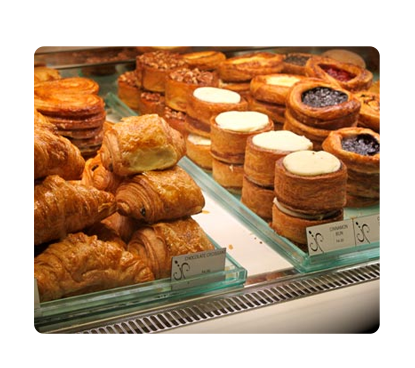
Bakeries and Confectionery Shop produces an extensive array of baked goods and pastries, including bread, cakes, cookies, donuts, tarts, muffins, Danish pastries, pies, gateaux, and more. This project distinguishes itself through its strong market demand, significant profitability, and future growth prospects. Expansion opportunities include opening new branches and introducing gluten-free products, natural sugars, and vegetable oils instead of hydrogenated alternatives.
Capital

rate of return

Recovery period Second year

Description Bakeries and Confectionery Shop

Description Bakeries and Confectionery Shop

Bakeries and Confectionery Shop produces an extensive array of baked goods and pastries, including bread, cakes, cookies, donuts, tarts, muffins, Danish pastries, pies, gateaux, and more. This project distinguishes itself through its strong market demand, significant profitability, and future growth prospects. Expansion opportunities include opening new branches and introducing gluten-free products, natural sugars, and vegetable oils instead of hydrogenated alternatives.

Mashroo3k for Economic Consulting is delighted to offer tailored services to investors considering an investment in Bakeries and Confectionery Shop. We conduct a thorough assessment of the project’s economic viability and implementation. Our services are comprehensive and encompassing, analyzing all aspects of the project, including marketing, technical, financial, and administrative considerations. Leveraging our extensive database, we analyze market indicators and forecast future requirements.
Project Products

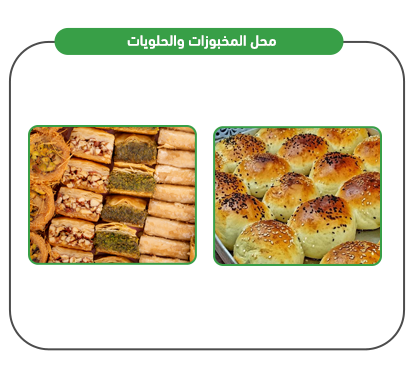
Project Products

  • Bread
  • Cakes.
  • Pastries.
  • Tarts.
  • Pavlova.
  • Muffins.
  • Oriental Pastries.
  • Donuts.
Why Mashroo3k ?

Why Mashroo3k ?

  • Mashroo3k has over 10 years of experience in preparing feasibility studies, conducting market research, and providing comprehensive consulting services.
  • Mashroo3k has offices in 7 international branches, located in Saudi Arabia, the UAE, Egypt, Qatar, Oman, Yemen, and Iraq, in addition to its agents in China, Singapore, and other countries.
    Having delivered over 7,000 feasibility studies, Mashroo3k has helped thousands of clients achieve their investment goals.
  • Mashroo3k’s services are accredited and trusted by all financial institutions and funding entities across the Middle East.
  • The company’s geographic reach spans 35 countries across all continents.
  • Mashroo3k holds membership in over 100 prestigious international organizations specializing in market research and business management.
  • Its team consists of 350 consultants with deep expertise in promising economic sectors, ensuring tailored solutions and strategies that meet clients’ needs.
  • Mashroo3k is partnered with more than 10,200 suppliers across 22 countries, providing logistical support for projects, including production lines, raw materials, machinery, and equipment.
  • With an extensive database, Mashroo3k enhances the accuracy of its forecasts and analyses, strengthening its risk management capabilities.
  • Project Features
  • Study Contents
  • Sector Indicator
  • The project as an investment opportunity
مؤشرات القطاع
  • Diverse selection of bakery items, pastries, and confections.
  • Products adhere to rigorous quality and food safety regulations.
  • Competitive pricing relative to comparable offerings in the market.
  • Convenient delivery options available.
  • Incorporation of cutting-edge technologies in the manufacturing process.
  • Strategic management of innovative ideas to enhance competitive advantages in development and marketing.
Executive Summary
  • Project Overview
  • Financial Indicators
  • Project justification
  • Government investment incentives for the project
  • Target Markets
  • Final indicators and outcomes of the project
Project Service/Product Study
  • Description of the project and all its services/products
  • Project advantages and production requirements
Market Size Study
  • Familiarity with distribution channels
  • Consumers’ behavior, desires, and habits
  • Competitors’ products or services and their strengths and weaknesses
  • The nature and attributes of the market
  • The size of the demand for a product or service
  • The available share of the target market
  • The optimal method of marketing
Study of Risks
  • Identifying the risks
  • Risks’ impact on the project
  • Methods of risk prevention
Technical Study
  • A detailed description of the project’s products, the expected production capacity, and identifying investment costs
  • Identifying the size of electrical and water power
  • Identifying the project’s employment
  • Identifying the project’s requirements
  • Estimating construction costs
  • Estimating the total capital
  • Estimating annual operating costs
  • Estimating the amount of operating capital
Financial Study
  • The total required investment costs of the project
  • Structuring the income statement, cash flow statement, and balance sheet of the first ten years of operation
  • Estimating the expected annual revenues of the project in light of the identified operating capacities
  • The optimal funding structure of the project in light of the investors’ capabilities and funding terms
  • The project financial indicators and sensitivity analysis
Regulatory and Administrative Study
  • The project workforce
  • Regulatory structure
  • Job duties
المشروع كفرصة استثمارية
  • According to the macroeconomic theory of sectors, the economy is divided into three main and large sectors:
    The first sector focuses on the extraction of raw materials and includes mining companies, lumber companies, oil exploration companies, as well as agricultural industries and fishing.
    The second sector relies on goods and their sale… Like this: (…such as automobile manufacturing, furniture, clothing trade, etc.).
    The third sector, known as the “services sector,” is responsible for providing and producing services, relying fundamentally on intangible elements. Like this: Entertainment, healthcare, transportation, hospitality, restaurants, and more. This theory suggests that as countries advance, their economies rely more on the third sector, unlike primitive countries, which depend largely on the first sector. For example, in the United States, the service sector makes up 85% of its economy.

    Kingdom of Saudi Arabia:

    The service sector is considered a large sector when we take a closer look at its activities. It includes wholesale and retail trade, restaurants and hotels, transportation, storage, information and communications, financial services, insurance, real estate, business services, community, social, and personal services, and finally, government services. Below, we will present the key indicators of the sector in Saudi Arabia

    • The service sector’s contribution to Saudi Arabia’s GDP is about 48.2%.
    • The activity of “wholesale and retail trade, restaurants, and hotels” contributes approximately 10.8% to the GDP.
    • The activity of “transportation, storage, information, and communications” contributes approximately 6.6% to the GDP.
    • The activity of “financial services, insurance, real estate, and business services” contributes 6.4% to the GDP.
    • The contribution of “Collective, Social, and Personal Services” activity to the GDP was 2.5%.
    • The activity of “government services” contributes 21.9% to the GDP.

    The State of Qatar:

    • The value of wholesale and retail trade activity in Qatar is estimated at approximately 50,083 million Qatari riyals.
    • The number of establishments operating in wholesale and retail trade reached 11,139 establishments, and the number of workers in these establishments reached 213,954 workers.
    • The compensation for employees in the wholesale and retail trade activity has reached 11,288,877 thousand Qatari riyals.

    • The number of establishments operating in the hotel and restaurant sector reaches 2,396, with 78,194 employees working in these establishments.
    • The compensation for employees in the hotel and restaurant sector has reached 2,947,431 thousand Qatari riyals.
    • The number of mobile phone subscribers in Qatar (regular subscription) is 976,015 individuals.
    • The number of mobile phone subscribers (prepaid services) in Qatar is 2,941,556 individuals.
    • The length of roads paved in the previous year in Qatar reached 2,224 kilometers.
    • The number of driving licenses issued in the previous year was 242,923 licenses.
    • The compensation of employees in the transportation and communications sector is 24,338,223 thousand Qatari riyals.

    • The number of insurance policies issued in Qatar during the past year was 715,897 policies.
    • The number of establishments operating in “Business Services” activities is 4,973 establishments.
    • The number of workers in “Business Services” activities is 215,285 employees.
    • The compensation for workers in “Business Services” activities exceeds 15,347,819 thousand Qatari Riyals.
    • The number of workers in “Social and Personal Services” activities in the private sector reaches 80,569 employees.
    • The compensation for employees in the “social and personal services” activities in the private sector is estimated at approximately 6,127,645 thousand Qatari riyals.

    State of Kuwait:

    • Wholesale and retail trade contributes approximately 1,644.3 million Kuwaiti dinars to the country’s GDP.
    • Restaurants and hotel activities contribute approximately 418.6 million Kuwaiti dinars to the GDP of Kuwait.
    • Transportation, storage, and communication activities contribute approximately 2,554.5 million Kuwaiti dinars to the GDP.
    • The paved road lengths in Kuwait are 91,340,068 square meters.

    United Arab Emirates:

    • Wholesale and retail trade, along with the repair of motor vehicles and motorcycles, contributes 12.3% to the GDP, amounting to 172,288 million AED.
    • The transportation and storage activity contributes 5.9% to the GDP, amounting to 82,461 million AED.
    • Activities related to accommodation and food services contribute 2.3% (32,357 million dirhams) to the GDP.
    • The information and communication sector contributes 2.9% (41,347 million dirhams) to the GDP.
    • The contribution of insurance activities to the GDP is estimated at 9.6% (134,773 million dirhams).
    • The number of insurance policies issued by the end of the last year was 7,584,607 policies.
    • The wholesale and retail trade sector accounts for 13% of the total workforce in the United Arab Emirates.

    • The transportation and storage sector accounts for 6.2% of the total workforce in the country.
    • Approximately 5% of the total workforce is employed in accommodation and food services activities.

    Sultanate of Oman:

    • The Gross Domestic Product (GDP) of the Sultanate is 29.3 billion Omani Rials.
    • Wholesale and retail trade contributes 7% to the GDP, amounting to 2,064.7 million Omani Rials.
    • Restaurants and hotels contribute 1.1% to the GDP, amounting to 308.6 million Omani Rials.
    • Transportation, storage, and communications activities contribute approximately 5.9% to the GDP, amounting to 1,721.2 million Omani Rials.
مؤشرات المشروع
  • Kingdom of Saudi Arabia:

    • According to the latest statistics, Saudi Arabia issued 100,944 new business licenses in the previous year, bringing the total number of issued commercial activity licenses to 348,173. It is noteworthy that wholesale and retail trade, as well as motor vehicle and motorcycle repair, accounted for the largest share of new licenses, with 48,242 licenses. The second-highest number of licenses was for accommodation and food services, with 16,531 licenses, followed by construction and building activities in third place, with 11,521 licenses.

By sector


Capital (in millions)


rate of return


  • Similar projects
  • Previous work